 Good important information You never ever enter your credit Card number in an http website! But if the web address begins with https://, That basically means your computer is talking to the website in a secure code that no one can eavesdrop on. What is the difference between http and https. Maybe you already knew this, but I thought it was Important enough to send even if you already know. FIRST, MANY PEOPLE ARE UNAWARE OF The main difference between http:// and https:// is. It's all about keeping you secure. HTTP stands for Hypertext Transport Protocol. Which is just a fancy way of saying it's a Protocol (a language, in a manner of speaking) For information to be passed back and forth Between web servers and clients. The important thing is the letter S which makes the difference between HTTP and HTTPS. The S (big surprise) stands for "Secure". If you visit a website or web page, and look at the address in the web browser, it will likely begin with the following: http://. This means that the website is talking to your Browser using the regular 'unsecured language. In other words, it is possible for someone to "eavesdrop" on your computer's conversation with the website. If you fill out a form on the website, someone might see the information you send to that site. This is why you never ever enter your credit Card number in an http website! But if the web address begins with https:// that basically means your computer is talking to the website in a secure code that no one can eavesdrop on. You understand why this is so important, right? If a website ever asks you to enter your credit Card information, you should automatically look to see if the web address begins with https://. If it doesn't, there's no way you're going to enter Sensitive information like a credit card number. PASS IT ON (You may save someone a lot of grief).
Never Enter Your Credit Card Number in an HTTP website
Good important information You never ever enter your credit Card number in an http website! But if the web address begins with https://, That basically means your computer is talking to the website in a secure code that no one can eavesdrop on. What is the difference between http and https. Maybe you already knew this, but I thought it was Important enough to send even if you already know. FIRST, MANY PEOPLE ARE UNAWARE OF The main difference between http:// and https:// is. It's all about keeping you secure. HTTP stands for Hypertext Transport Protocol. Which is just a fancy way of saying it's a Protocol (a language, in a manner of speaking) For information to be passed back and forth Between web servers and clients. The important thing is the letter S which makes the difference between HTTP and HTTPS. The S (big surprise) stands for "Secure". If you visit a website or web page, and look at the address in the web browser, it will likely begin with the following: http://. This means that the website is talking to your Browser using the regular 'unsecured language. In other words, it is possible for someone to "eavesdrop" on your computer's conversation with the website. If you fill out a form on the website, someone might see the information you send to that site. This is why you never ever enter your credit Card number in an http website! But if the web address begins with https:// that basically means your computer is talking to the website in a secure code that no one can eavesdrop on. You understand why this is so important, right? If a website ever asks you to enter your credit Card information, you should automatically look to see if the web address begins with https://. If it doesn't, there's no way you're going to enter Sensitive information like a credit card number. PASS IT ON (You may save someone a lot of grief).
Life Story of Barak Obama

Born in Hawaii
Obama is actually of mixed heritage. He was born in 1961 in
The marriage between Obama's parents was a short-lived one, however. In the early 1960s, interracial relationships were still quite rare in many parts of
Obama's mother remarried a man from
"In no other country on earth is my story even possible."
about his mixed heritage in his teen years. Outside the house, he was considered African American, but the only family he knew was his white one at home. For a time, he loafed and let his grades slip; instead of studying, he spent hours on the basketball court with his friends, and has admitted that there was a time when he experimented with drugs, namely marijuana and cocaine. "I was affected by the problems that I think a lot of young African American teens have," he reflected in an interview with Kenneth Meeks for Black
Excels at Harvard Law School
Obama graduated from Punahou and went on to
Feeling it was time to move on, Obama applied to and was accepted at
Obama also had another reason for returning to
Writes autobiography
Obama's time at the Law Review had netted him an offer to write a book. The result was Dreams from My Father: A Story of Race and Inheritance, published by Times Books in 1995. The work merited some brief but mostly complimentary reviews in the press. Obama, however, was not hoping for a career as an author: he decided to run for a seat in the
Obama won that 1996 election and went on to an impressive career in the Senate chambers in
Obama made his first bid for U.S. Congress in 2000, when he challenged a well-known black politician and former Chicago City Council member, Bobby Rush (1946–), for his seat in the U.S. House of Representatives. Rush was a former
Black Senators in U.S.
Barack Obama became the fifth African American senator in
Before 1913 and the passage of the Seventeenth Amendment to the U.S. Constitution, members of the U.S. Senate were not directly elected by voters in most states, however. Instead they were elected by legislators in the state assemblies, or appointed by the governor. Still, because of the Reconstruction Era reforms, many blacks were elected to the state legislatures that sent senators to
In 1875,
Nearly a hundred years passed before another African American was elected to the Senate, and this came by statewide vote. Edward William Brooke III (1919–), a Republican from
1960s radical who had founded the
Enters Senate race
A few years later, Obama decided to run for a seat in the U.S. Senate when Illinois Republican Peter G. Fitzgerald (1960–) announced he would retire. Some of Obama's supporters thought he was aiming too high, but this time he beat out six other Democratic challengers in the primary with 53 percent of the vote. Suddenly, state and even national Democratic Party leaders began taking him and his Senate campaign seriously. In the primary, he had managed to do what few African American politicians had ever done: record an impressive number of votes from precincts that had a predominantly white population.
In his 2004 Senate race, Obama faced a tough Republican challenger, however: a former investment banker turned parochial-school (school supported by a church parish) teacher named Jack Ryan (1960–). Ryan was blessed with television-actor good looks and had even once been married to Boston Public star Jeri Ryan (1968–). But Jack Ryan was, like one of Obama's earlier primary opponents, derailed by allegations about his personal life.
Obama, by contrast, was winning public-opinion polls among every demographic group that pollsters asked. He was even greeted with rock-star type cheers in rural
"That makes my life poorer"
Obama did not disappoint that evening. His speech, which he wrote himself and titled "The Audacity of Hope," was stirring and eloquent, and quickly dubbed by political analysts to be one of the best convention keynote addresses of the modern era. He earned several standing ovations during it, and Obama's confident, assured tone was broadcast to the rest of the nation. Cameras occasionally scanned the crowd to show tears on the faces of delegates. Obama praised Kerry's values and experience, and he reminded delegates and the national television audience that the country's strength came from unity, not division—that Americans had created a thriving nation out of many diverse ethnic groups and ideologies in its 228-year history. Economic policies aimed at providing a better life for everyone, not just a privileged few, was the American way, he said. "If there's a senior citizen somewhere who can't pay for her prescription and has to choose between medicine and the rent, that makes my life poorer, even if it's not my grandmother," he told the crowd. "If there's an Arab American family being rounded up without benefit of an attorney or due process, that threatens my civil liberties. It's that fundamental belief—I am my brother's keeper, I am my sister's keeper—that makes this country work."
Obama's speech, analysts said almost immediately, struck a hopeful, healing tone for a drastically divided nation and what had become a bitter, insult-heavy presidential contest. Obama, asserted Time 's Amanda Ripley, "described a country that
Obama won his bid for the Senate a few months later by a large margin, taking 70 percent of the
Obama and his wife have two young daughters, Malia and Sasha. Instead of moving to
Canada uncovers cyber spy network
 An electronic spy network, based mainly in China, has infiltrated computers from government offices around the world, Canadian researchers say.
Experts at the University of Toronto said the network had infiltrated 1,295 computers in 103 countries.
They include computers linked with the Dalai Lama - Tibet's spiritual leader.
The researchers say they have no conclusive evidence that the Chinese government is involved. Beijing has denied any involvement.
The researchers were acting on a request from the Tibetan spiritual leader's office to check whether the computers of his Tibetan exile network had been infiltrated.
The movie to watch; Curious Case Of Benjamin Button, Movie Review.
 The Curious Case of Benjamin Button is a story of a man born with the physical characteristics and appearance of an 80-year-old man. He grows younger and younger as the years pass on, which makes him an outsider to those that know of his affliction. However, that is not to confuse physical appearances with the heart, mind and soul of a man. Benjamin Button’s aging process, as has been pointed out by others, is merely a metaphor for how the beginning and ends of our lives are no different whether lived backwards or forward with a focus on the importance of how we live the moments in between. Beyond that, I ask you to not even consider Benjamin’s “curious” aging process and simply get involved in the story.
Benjamin is born in beautifully recreated New Orleans of the early 1900s; his mother dies only seconds later and as a result his father runs off and leaves Benjamin on the doorstep of an old folks home where he will grow up and come to know a caretaker named Queenie (Taraji P. Henson) as his mother. The retirement home is an obvious irony, but it is a perfect one at that; watching an old man scold Benjamin for fooling around on the outside porch in his wheelchair is priceless. From here Benjamin continues to grow into his body. His arthritis soon disappears and he begins work on a tugboat, which leads him into World War II at the age of 17. Seen as an old man, as his face would lead you to believe he is in his 50s, the tugboat’s Captain Mike (Jared Harris) buys Benjamin his first drink and finds him a prostitute for what would be his first sexual encounter. You are experiencing life with Benjamin, a man who always seems an outsider and yet his life is not much different than that of anyone else.
Cate Blanchett plays Daisy whom we first meet laid up in a hospital dying of old age as Hurricane Katrina rages outside. Reading to her is her daughter Caroline played by Julia Ormond. The story of Benjamin’s life is told from Daisy’s hospital room as Caroline reads from Benjamin’s diary and the love between Daisy and Benjamin comes to light. The two first become friends as youngsters and ultimately come together again at a time in Benjamin’s life when his appearance has caught up with his age. The love between Daisy and Benjamin is at the heart of this story and despite its movie love cliches I fell for it hook, line and sinker.
I won’t go so far as to say this is a perfect movie (what movie really is?), bu
 t I couldn’t take my eyes off of it. The film is as beautifully told as it is visually appealing. Some are sure to have a problem with the simplicity of it all, but that is a realistic expectation considering the film’s two hour and 46 minute running time, but epic it is not. The simple narrative with one extraordinary factor is the film’s ultimate appeal. However, despite its simplicity and its nearly three hour duration I never once looked at my watch or wondered when it would all end. It felt like no more than 90 minutes and I would gladly sit through it again and hope I get to do so very soon.
From a technical perspective the film is flawless. From the beautiful cinematography by director David Fincher’s longtime collaborator Claudio Miranda to the production designers across the board as this film is certain to be an Oscar favorite in most every design category. The script, adapted by Eric Roth from the F. Scott Fitzgerald short story of the same name will be compared by many to Roth’s earlier Oscar-winning adaptation, Forrest Gump, but the experiences Gump has compared to Benjamin are wildly fantastical while Button’s life is more-or-less ordinary outside of his unique aging process.
Cate Blanchett has already been discussed in many corners as a potential Best Actress nominee for a performance shifting from the life of a passionate dancer, to a lover and to an old woman. Blanchett, as always, is great in the role, playing an active listener as an old woman and a hurricane force as a younger woman. However, the performance of the film belongs to Pitt. I have read anything from praise to dismissal for Pitt’s quiet performance of Benjamin Button, but to me it was flawless.
As a young man Pitt’s aged face was superimposed onto the body of a little person using copious amounts of CGI, but to such a point you can never tell. His character is oftentimes limited to only a couple of words per scene, but it is the quiet and reserved manner in which they are delivered that caught my attention. Benjamin’s voice also serves as the film’s narrative voiceover as Caroline reads from his diary, a point some have harped on and I can’t completely disagree. If there is one problem with the film it is the inclusion of Daisy’s daughter as her reactions to the story are, for the most part, foregone conclusions and offer very little to the emotions of the story. The connection is always between Daisy and Benjamin and had they abandoned the reading of the diary entirely this film would have been shorter and most likely much easier for many to enjoy.
For all its worth, The Curious Case of Benjamin Button is a masterpiece. I believe even its detractors will be able to enjoy it much more as time passes. Some have said the older you are the more you will connect with the story, I am only 31-years-old so I don’t know how much older you need to be, but I see no reason why anyone looking for a great story, told from a unique perspective would not also fall in love with this film.
Cate Blanchett has already been discussed in many corners as a potential Best Actress nominee for a performance shifting from the life of a passionate dancer, to a lover and to an old woman. Blanchett, as always, is great in the role, playing an active listener as an old woman and a hurricane force as a younger woman. However, the performance of the film belongs to Pitt. I have read anything from praise to dismissal for Pitt’s quiet performance of Benjamin Button, but to me it was flawless.
As a young man Pitt’s aged face was superimposed onto the body of a little person using copious amounts of CGI, but to such a point you can never tell. His character is oftentimes limited to only a couple of words per scene, but it is the quiet and reserved manner in which they are delivered that caught my attention. Benjamin’s voice also serves as the film’s narrative voiceover as Caroline reads from his diary, a point some have harped on and I can’t completely disagree. If there is one problem with the film it is the inclusion of Daisy’s daughter as her reactions to the story are, for the most part, foregone conclusions and offer very little to the emotions of the story. The connection is always between Daisy and Benjamin and had they abandoned the reading of the diary entirely this film would have been shorter and most likely much easier for many to enjoy.
For all its worth, The Curious Case of Benjamin Button is a masterpiece. I believe even its detractors will be able to enjoy it much more as time passes. Some have said the older you are the more you will connect with the story, I am only 31-years-old so I don’t know how much older you need to be, but I see no reason why anyone looking for a great story, told from a unique perspective would not also fall in love with this film.
Exclusive !, The Dying moments of Jade Goody....!!
Wow,,, The title seems to be so interesting, right? How eager the people are to see the dying moment of a celebrity.?! There is a question. Is Jade Goody the victim of media papparassi? She herself came into the public with her cancer and dying body. But the media was really celebrating this, and you too jumped to this page with an eagerness to see the dying moments of a cancer patient, only because she is a celebrity.

It may be for the first time in the world, a women and cancer captures headlines for a long days, She passed away peacefully, But questions remaining. Read the below lines...
I don’t know which aspect of Jade Goody’s hopeless-seeming battle with cancer is most depressing. The reality television star appeared in the third series of Big Brother, in 2002, and endeared herself to the nation by being big-hearted, guileless and incredibly stupid; fame secured, she then went back onto Celebrity Big Brother in 2007. It all went horribly wrong – she was pilloried as a racist bully who insulted Bollywood actress Shilpa Shetty, caused a national outcry and was sent home in disgrace.
The giddiness and lack of self-editing, which had seemed so funny and endearing a few years before, now seemed vile. No allowances were made for the fact that Goody, who is mixed race, was the first underclass television celebrity. Her father was an addict and a criminal; he served time for robbery and died of an overdose aged 42. Her mother is a one-armed lesbian who used to be addicted to crack; Jade has spoken about mothering her own mother when she was little.
Jade’s childhood was tough, let’s say. So her failure to behave as though fresh out of charm school should hardly have come as the world’s greatest surprise. But the tranche of society to which she held up a mirror only wanted to see itself – and its aspirations – reflected positively. Jade Take 1 did this brilliantly: she showed them that anyone could be famous and rich and on telly, regardless of intelligence, opportunity, class, race or background. She was a survivor and she was from a dump. The public loved her for it.
But when Jade Take 2 came along in 2007 she showed another side, on camera, in real time and live from the dung-heap: prejudice and ignorance, kneejerk name-calling, lumpen gracelessness, inarticulate rage permanently just below the surface. People began to hate her – really hate her. Today, several websites are devoted to her illness and gleefully anticipate her demise; one is called When Will Jade Goody Die? A satirical website wonders whether Goody will be the first “chav saint”.
The lucrative contracts and television series she had secured fell away; she gave contrite but uncomprehending interviews, weeping face swollen, unable to grasp that we only wanted her to “be herself” up to a particular, manageable, not-revolting point. Her private life was a mess. She separated from the father of her two young sons and took up with Jack Tweedy, a shifty type who didn’t inspire confidence. (Tweedy has recently been let out of jail, having served a sentence for GBH.) And then, hoping to make amends, she agreed to go on India’s version of Big Brother to show that she wasn’t really a racist bully. During filming she was told – on camera, at her insistence – that she had cervical cancer. Goody is so loathed that internet rumours instantly started circulating about how this was a publicity stunt.
It wasn’t. Following chemotherapy, radiotherapy and a radical hysterectomy, last week Max Clifford, Jade’s publicist, confirmed that the cancer had spread to her liver, bowel and groin. The treatment has left her bald. Her hopes of survival are slight. She remains vocal about the minutiae of her life and keen to express herself via newspaper and television interviews, for which she is paid. These are almost unbearable to watch, read or listen to: whatever you may think of her, the fact remains that Goody is a young woman of 27, with two small children, who probably doesn’t have long to live.
The giddiness and lack of self-editing, which had seemed so funny and endearing a few years before, now seemed vile. No allowances were made for the fact that Goody, who is mixed race, was the first underclass television celebrity. Her father was an addict and a criminal; he served time for robbery and died of an overdose aged 42. Her mother is a one-armed lesbian who used to be addicted to crack; Jade has spoken about mothering her own mother when she was little.
Jade’s childhood was tough, let’s say. So her failure to behave as though fresh out of charm school should hardly have come as the world’s greatest surprise. But the tranche of society to which she held up a mirror only wanted to see itself – and its aspirations – reflected positively. Jade Take 1 did this brilliantly: she showed them that anyone could be famous and rich and on telly, regardless of intelligence, opportunity, class, race or background. She was a survivor and she was from a dump. The public loved her for it.
But when Jade Take 2 came along in 2007 she showed another side, on camera, in real time and live from the dung-heap: prejudice and ignorance, kneejerk name-calling, lumpen gracelessness, inarticulate rage permanently just below the surface. People began to hate her – really hate her. Today, several websites are devoted to her illness and gleefully anticipate her demise; one is called When Will Jade Goody Die? A satirical website wonders whether Goody will be the first “chav saint”.
The lucrative contracts and television series she had secured fell away; she gave contrite but uncomprehending interviews, weeping face swollen, unable to grasp that we only wanted her to “be herself” up to a particular, manageable, not-revolting point. Her private life was a mess. She separated from the father of her two young sons and took up with Jack Tweedy, a shifty type who didn’t inspire confidence. (Tweedy has recently been let out of jail, having served a sentence for GBH.) And then, hoping to make amends, she agreed to go on India’s version of Big Brother to show that she wasn’t really a racist bully. During filming she was told – on camera, at her insistence – that she had cervical cancer. Goody is so loathed that internet rumours instantly started circulating about how this was a publicity stunt.
It wasn’t. Following chemotherapy, radiotherapy and a radical hysterectomy, last week Max Clifford, Jade’s publicist, confirmed that the cancer had spread to her liver, bowel and groin. The treatment has left her bald. Her hopes of survival are slight. She remains vocal about the minutiae of her life and keen to express herself via newspaper and television interviews, for which she is paid. These are almost unbearable to watch, read or listen to: whatever you may think of her, the fact remains that Goody is a young woman of 27, with two small children, who probably doesn’t have long to live.
Slumdog Millionaire Stars celebrating Holi
Here is the video, where two slumdog millionaire starts Rubina Ali and Azharuddin Ismail, celebrating holi on 14 March, in their slum with friends.
Slumdog Millionaire actors take to the catwalk
The child actors from "Slumdog Millionaire", Rubina Ali and Azhar Mohammed Ismail were the centre of attraction at a fashion show by designer Ashima Leena at the ongoing
Rubina and Azhar walked the runway to the hit song "Jai Ho" wearing clothes designed by Ashima and Leena Singh.
At the post-show press conference, the two said they liked the clothes so much that they were keeping them.
Earlier in the day, the two, accompanied by the designer duo, met Sonia Gandhi, chairperson of the ruling coalition, United Progressive Alliance and President o
Azhar's mother, Shamim Sheikh Ismail, said she handed over a letter to Sonia Gandhi requesting a house for the family since they did not have a regular house to live in.
The two children live in a shantytown running along the railway tracks in Mumbai.
Azhar, who portrays Salim, the hero's brother in the much-acclaimed "Slumdog Millionaire", displayed some fancy Bollywood moves along with his co-star and neighbour Rubina as they danced to "Jai Ho" - much to the delight of the press.
Ashima and Leena said they had invited the children to be part of the show as they had touched their hearts.
The duo seeks to create awareness among the glamorous fashion world on how much one can contribute to help the underprivileged slum children.
They also launched 'The Ashima-Leena Jai Ho' Foundation for helping the slum children in Delhi and Mumbai.
Children in Indian town remember mystery benefactor Jade
Itarsi (Madhya Pradesh), March 23 (IANS) They may never have watched her on TV or even seen her photograph, but British reality TV star Jade Goody’s death in far away London sent many children here into mourning. After all, it was Goody’s secret donation that had helped better their lives.
Unknown to most, Goody had donated Rs.2 million (approx $27,000) to the Jeevodaya Society Centre in Itarsi, about 200 km from the state capital Bhopal, last year. The money had helped the charity send 400 runaway children back home and rehabilitate 72 others at the centre.
Unknown to most, Goody had donated Rs.2 million (approx $27,000) to the Jeevodaya Society Centre in Itarsi, about 200 km from the state capital Bhopal, last year. The money had helped the charity send 400 runaway children back home and rehabilitate 72 others at the centre.
“Itarsi station attracts hundreds of desperate kids. The children rehabilitated by Jade’s money were a few of them. They used to sell snacks and water to passengers passing through and were made to go hungry if they didn’t make enough money. Then they would beg for food. But now they have a place in a dormitory and eat decent meals,” said Sister Clara Joseph, who runs the Jeevodaya Society.
“Jade’s money helped 72 children lead a meaningful life. We are so grateful - but also so sad that Jade hasn’t been able to see all the good she has achieved. The children have been praying every day for her well being since a fortnight ago,” Joseph told IANS.
While 52 boys and 14 girls escaped “filth and degradation”, another six children got all help except accommodation in the shelter, she added.
Navneet Kohli, who has a general store outside Itarsi railway station, which sees 170 trains pass through every day, has seen many children come and go.
“These youngsters, just like the kids in ‘Slumdog Millionaire’, seemed destined for a life of desperate hunger and destitution until Jade came forward as a mystery benefactor to pay for their food, clothes and medicine,” he said.
The 27-year-old TV star, who died of cervical cancer Sunday, had made the donation in 2007 when she visited India after her clash with Bollywood star Shilpa Shetty on the reality show “Celebrity Big Brother”. She decided to help the children through a British charity, Railway Children, but kept quiet about it.
The charity got Jade’s money last year and the beneficiary was the Jeevodaya Society, whose shelter was built by British charity Butterfield’s Edward Johnson Trust.


Jade Goody, The life is waiting for death, infront of cameras......
From being brought up in a small house in southeast London to becoming one of the most hated- turned-loved person in Britain, Shilpa Shetty's bete noire in 'Big Brother' always lived her life for the cameras.Born as Jade Cerisa Lorraine Goody on June 5, 1981, her mother Jackiey Budden raise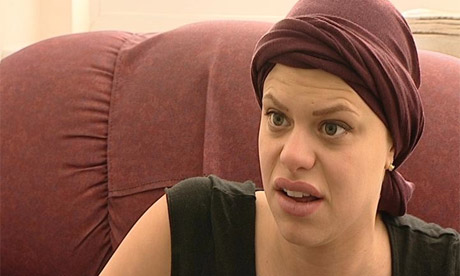
Jade Goody has chosen a selection of photographs she wants to be buried with.
The dying reality TV star is taking comfort in pictures of her, mum Jackiey Budden and sons Bobby, five and Freddie, four, on holiday this January and wants them placed in her coffin.
A source said: "The pictures make Jade feel close to the boys, as she knows she isn't likely to see them again."
Jackiey - who yesterday (18.03.09) left Jade's Essex home in tears - said the holiday was Jade's happiest time since she was diagnosed with cervical cancer last year.
She said: "Jade was so relaxed in the sea. It helped all the pain in her joints and uplifted her. We all had a lovely time."
Although Jade, 27, is now too ill for Bobby and Freddie to visit, they have been spending time at their father Jeff Brazier's house making Mother's Day cards.
An insider said: "Jade has explained to them she is very sick and is going to live in heaven. They realise something isn't right and want her to know how much she means to them."
Jade - who is now believed to have only hours left to live - is too sick for any visitors other than Jackiey, 50, and husband Jack Tweed. A prayer group arrived at her home yesterday to "lay their hands" on her but were turned away.
The five - including a pastor - claimed to have had a premonition that Jade would pull through, but a family friend told them: "It is very kind of you to offer up your prayers, but this is not the right way to do it.
"Please go back to your church and pray there instead."
Meanwhile, celebrity magazine OK! - which paid £700, 000 for the rights to Jade and Jack's recent wedding - have been blasted for publishing a 'tribute issue' to the star on Tuesday (17.03.09).
The black-bordered cover of the magazine reads '1981-2009' and carries the words 'in loving memory', implying Jade is already dead.
Although furious fans have called for a boycott of the issue - which claims to carry her 'last words' - and the publication's editor to be sacked, the issue reportedly has the support of Jade's family.
A magazine spokesperson said: "OK!'s tribute issue is a celebration of Jade's amazing life."

The most advanced Mobile OS.
On March 17, Apple presented the blueprint for iPhone OS 3.0, the next version of the world’s most advanced mobile platform. In addition to previewing its innovative features, Apple gave members of the iPhone Developer Program immediate access to the iPhone OS 3.0 software beta and an updated Software Development Kit (SDK) with over 1,000 completely new APIs.
Advance preview of 100 new features.
For iPhone owners, it just keeps getting better. When iPhone OS 3.0 arrives this summer, it will introduce over 100 new features, including the ability to:
Search your iPhone
Cut, copy, and paste
Send photos, contacts, audio files, and location via MMS*
Read and compose email and text messages in landscape
Advance preview of 100 new features.
For iPhone owners, it just keeps getting better. When iPhone OS 3.0 arrives this summer, it will introduce over 100 new features, including the ability to:
Search your iPhone
Cut, copy, and paste
Send photos, contacts, audio files, and location via MMS*
Read and compose email and text messages in landscape
Slumdog actors show Mumbai's rags and riches
The sprawling slums caressing the east side of Bandra railway station in Mumbai (Bombay) are no different from hundreds of slum clusters all across the city.
They are filthy, without a sewage system and have rows upon rows of makeshift rooms made of plastic sheets.
They are filthy, without a sewage system and have rows upon rows of makeshift rooms made of plastic sheets.
Malnourished children seemingly without any care in the world often run around the narrow by-lanes. Some go to schools but many don't.
Visibly the slums may be no different from those in the film sets of the award winning film, Slumdog Millionaire, but the reality is much harsher.
Slumdog finally opens in India on Friday, a day after the Oscar nominations and following worldwide success.
Mosquitoes

Slums and swanky buildings stand cheek by jowl in this city and yet their worlds don't meet.
People in the Bandra slums - like many others in the city - live in grinding poverty in the shadow of the city's new business district, the Bandra Kurla Complex.
Mumbai's slums and upmarket districts exist hand in handAzharuddin Mohammed Ismail, who plays the youngest version of the main character's brother Salim in the film, lives with his parents and siblings in a makeshift plastic tent, pitched on a half-finished government park.
Besides friends and neighbours, he has a big garbage dump and armies of mosquitoes and flies for company.
Ten-year-old Azharuddin's mother says they have been homeless for a while: "We have been squatting on this government park since the time our hutments were demolished over a year ago and despite showing the right documents to the authorities we have not been allotted our room [a one-room tiny flat]."
Rubina Ali - who portrays the youngest version of the leading lady Latika in the film - is playing with Azhar and other children.
Their faces glow in the rays of the fading sunlight. They greet the BBC team with coyness. Ask them to pronounce the film's title and they fumble amid nervous smiles. "Aslum dog minaire," says Rubina. "No," Azhar tries to correct her, with his own incorrect version.
'Miseries and pain'
A few days before its release in India an intense debate is raging whether the film has been made in the image of a Westerner.
Many Indians are upset over what they feel is the film's reinforcement of stereotypical Western views about India. They believe the film bagged the Golden Globes because it depicted India's underbelly in a white man's image.
But Rubina and Azhar's poverty-stricken existence, with an uncertain future, makes this debate redundant.
Indeed the child actors' parents believe the argumentative Mumbaikars often tend to ignore their plight.
The parents question whether a camera can ever really capture the miseries and pain of the slum dwellers. "( in the picture, From L) Tanay, Tanvi and Asutosh have learned a lot from filming"
Interestingly, the film itself is a great leveller. Its cast includes children from the middle class and exceptionally wealthy families. The rich boys in the film say interacting with the slum kids was a humbling experience.
Tanay Chheda lives in one of the city's wealthiest enclaves. "It's the world's 10th richest street," he says.
Tanay, 12, plays the middle version of leading role Jamal.
He says that he now looks at the slum kids with more compassion and love and wonders why there's so much fuss about showing poverty in Mumbai.
"Danny Boyle [the film's British director] wanted to show the truth in the movie. If we only had to show something wrong or negative about India then we wouldn't have shown that a slum boy becomes a millionaire."
Asutosh Lobo Gajiwala, who plays the middle version of the main character's brother Salim, says that if "you put a rich man in a life like theirs, the person will go into depression, but slumkids find happiness in anything and everything".
Asutosh, 15, says he believes all human beings are equal. "I was always aware that God has given me everything, but working on this movie it has clearly underlined my thought."
'Love school'
Tanvi Ganesh Lonkar plays the middle version of Latika. She insists that Danny Boyle loves Mumbai regardless of what the critics say.
There is debate in India whether the film reinforces Western views"He does not have any wrong views about our city. He always compliments this city. He always says this city is the best."
Certainly it appears that despite the merits or otherwise of capturing raw poverty in Mumbai, Azhar and Rubina's lives are in the throes of change, thanks to the exposure they had during the making of the movie. They now say they "love their school".
They now also have big dreams.
Azhar says he wants to be the next Salman Khan and Rubina would like to become as big a star as Preity Zinta, both leading Bollywood actors.
If they succeed, life will imitate art in another rags-to-riches story.

Courtecy: BBC News (http://news.bbc.co.uk/2/hi/south_asia/7840810.stm)
Subscribe to:
Posts (Atom)